



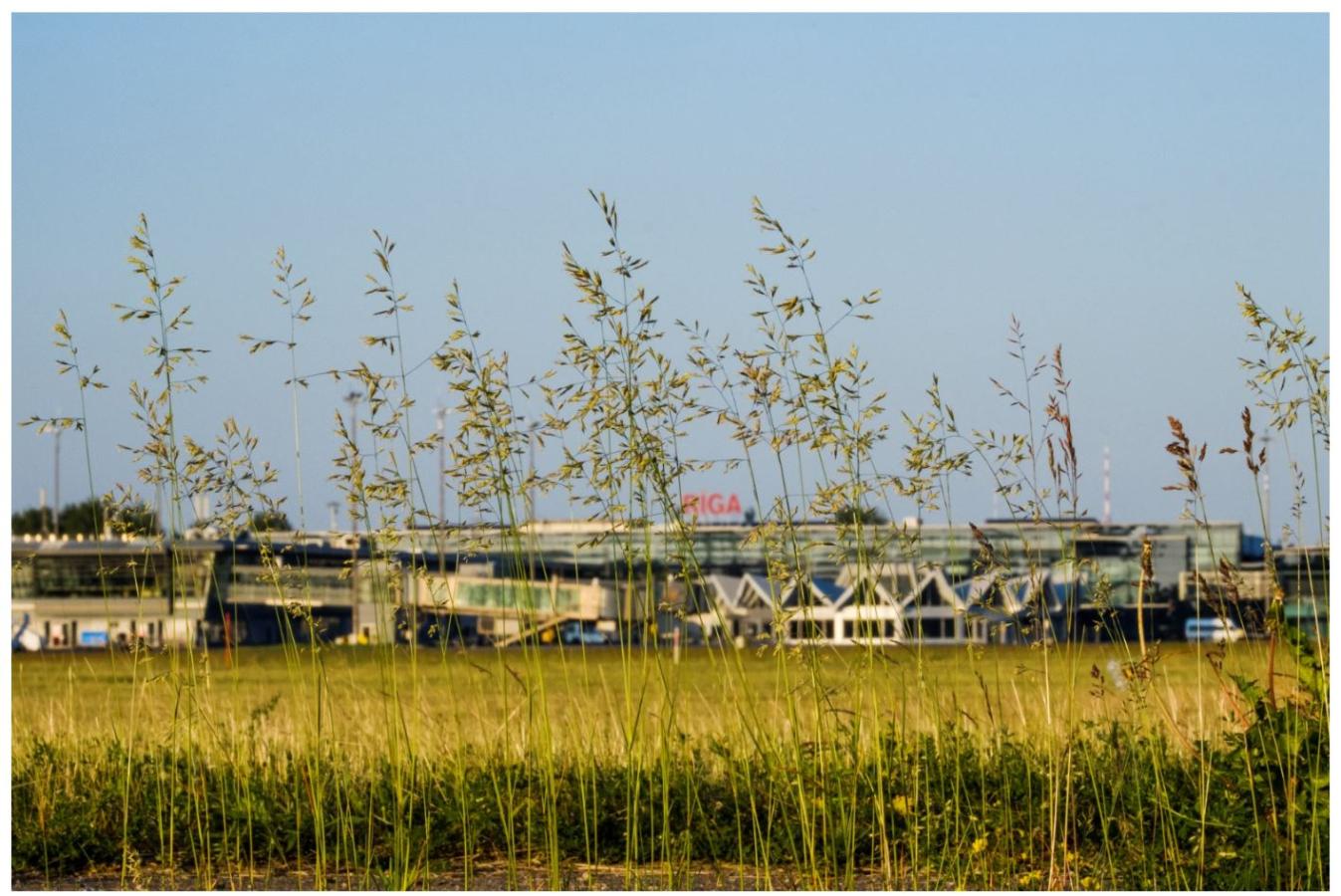
Alongside the development of the Riga Airport Master Plan 2025-2050, a strategic environmental assessment is being carried out to evaluate the impact of the planned development projects on various environmental aspects. The environmental report provides a detailed analysis of ten different environmental aspects.
The analysis indicates that the environmental impact of the measures outlined in the airport’s Master Plan is negligible, and in some cases even positive. For example, modeling results show that CO₂ emissions from the LTO cycle are expected to decrease from 45,283 tons in 2024 to 30,311 tons by 2050.
Environmental Noise
Regarding the important issue of environmental noise resulting from airport growth, the analysis indicates that the long-term increase in noise levels up to 2050 will not be linearly proportional to the growth in flight numbers; instead, it is expected to stabilize and even decrease per flight/passenger. The environmental impact assessment emphasizes that noise-sensitive areas should be included in municipal land-use plans as zones with special regulations, establishing additional protective measures to mitigate noise effects. Examples include integrating quiet façade solutions, replacing windows, or implementing enhanced sound insulation. Planning restrictions should also be applied to new noise-sensitive developments within these zones.
Water
The expansion of rainwater collection and treatment systems is planned, along with regular monitoring to promptly identify and mitigate pollution risks.
Soil
Since the planned projects are being implemented on already developed land, the loss of natural habitats and agricultural land is minimal.
Biodiversity
The southern apron expansion partially affects the protected habitat 2180 “Wooded Dunes of Coastal Area,” but compensation measures are planned. Airfield development reduces bird concentrations in the area, thereby decreasing the risk of bird strikes while simultaneously enhancing safety.
Landscape and Cultural Heritage
Facilities are located within the existing industrial environment, where man-made elements already dominate, thus maintaining overall landscape compatibility. No significant visual disharmony is expected, and no impacts on cultural heritage sites are anticipated.
Overall, the strategic environmental assessment concludes that the planned development of Riga Airport is proportionate, manageable, and aligned with international environmental and climate objectives. To ensure both sustainable development and the well-being of the surrounding environment and residents, certain environmental risks are planned to be managed through specific mitigation measures.