



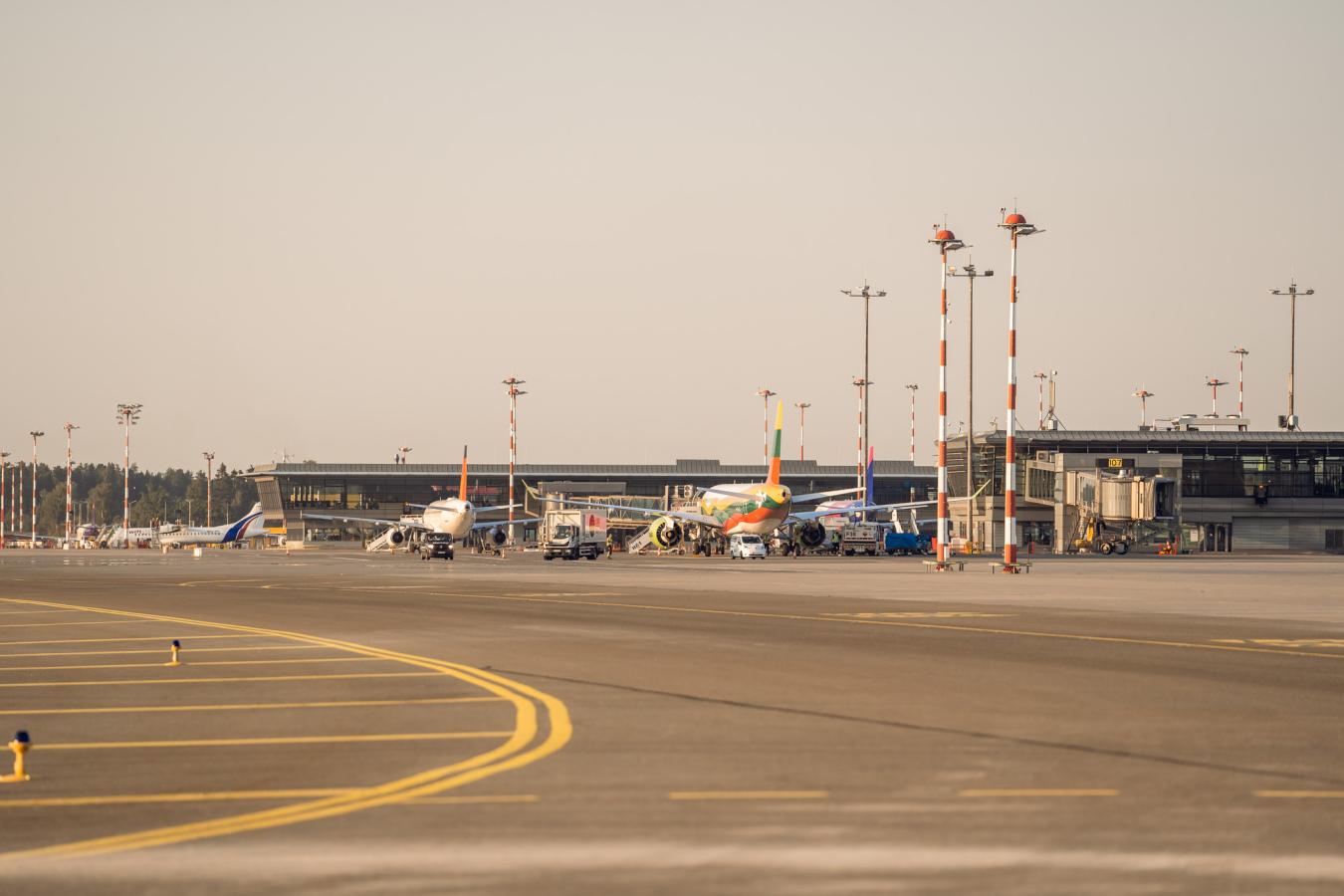
The Riga Airport Masterplan 2025–2050 is a strategic document that outlines the airport’s infrastructure development vision for the next 25 years and the territory required for future expansion, based on data and analytical research of the projected future demand for aviation services. The development steps defined in the Masterplan will enable the airport to be prepared for future demand, technologies, and passenger needs.
The Riga Airport Masterplan is based on four main elements:
The plan foresees a phased development aligned with passenger growth, thereby ensuring balanced and sustainable expansion and flexible investment planning that meets future needs.
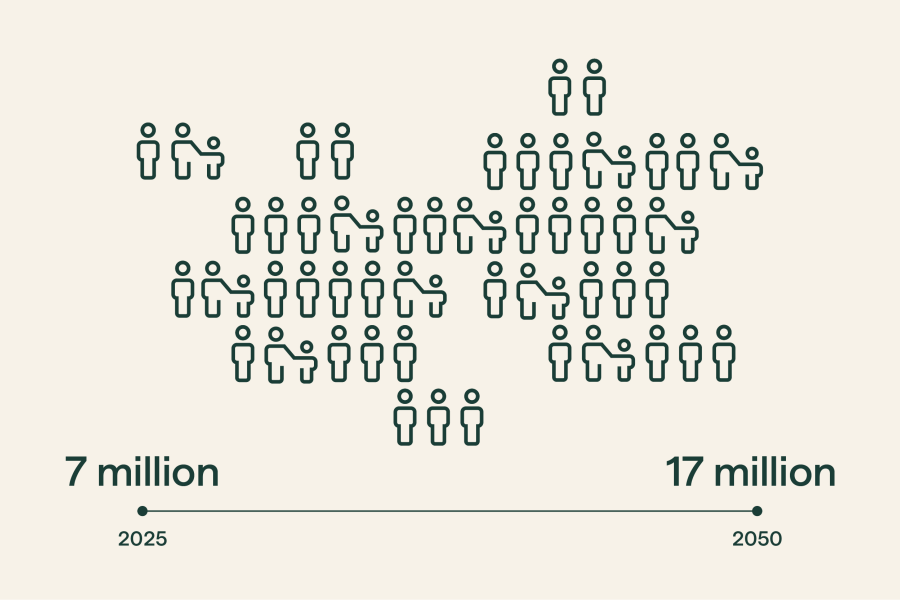
Planned infrastructure projects will be implemented gradually, in line with actual passenger volumes and the needs of the aviation business. This means that each development phase – from terminal expansion and improvements to transport access, to the creation of new service areas and commercial spaces – will commence only when demand and operational capacity objectively justify it. Such an approach ensures balanced growth, efficient resource planning and utilization, and the ability to adapt the pace of development to real market dynamics.
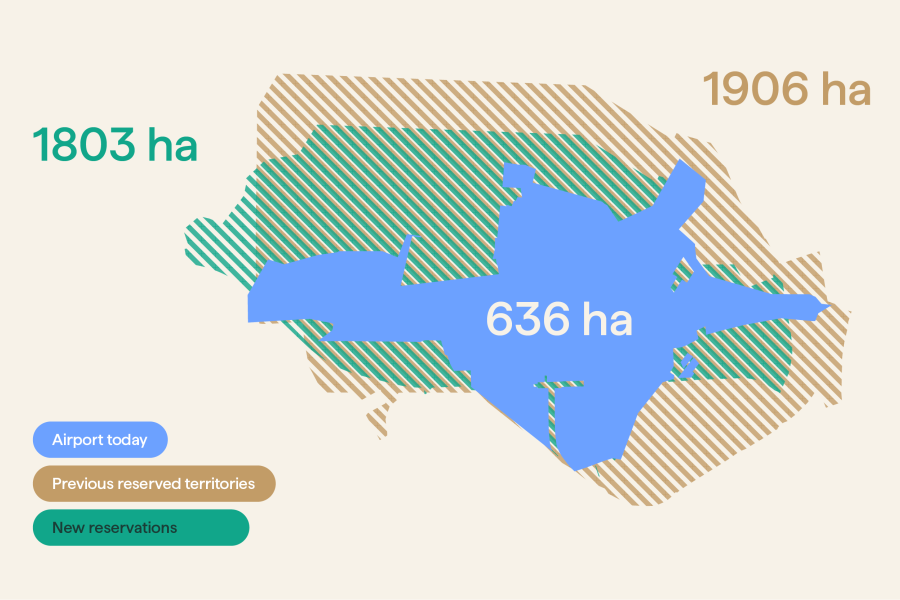
Currently, Riga Airport is located on a territory of 636 hectares, and according to the existing development plan, 1,906 hectares are reserved for its future expansion. During the creation of the new Master Plan, the reserved territory for future development has been reviewed, resulting in a reduced area of 1,803 hectares, as well as changes to its boundaries. The reserved area is intended not only for the development of the existing airfield and passenger service infrastructure, but also for the implementation of new development projects, including improvements to transport access, expansion of service and logistics zones, the creation of a multifunctional airport city, and the integration of sustainability and innovation solutions.
Airfield Infrastructure
In line with projected passenger flow growth, the Master Plan foresees the development of Riga Airport’s airfield infrastructure, focusing on efficiency, sustainability, and increased capacity. New taxiways and rapid exit taxiways, a new Southern apron with aircraft parking, and modern de-icing zones will enable faster, safer, and more environmentally friendly aircraft handling in all weather conditions.
The infrastructure development phases are planned so that the airport can not only flexibly adapt to the anticipated growth in air traffic but also minimize environmental impact and noise in the surrounding area. One of the major airfield development projects – the reconstruction of Apron 4 for dual civil-military use – has already commenced with support from EU funds.
Passenger Facilities
Riga Airport aims to create an environment where every passenger feels safe, comfortable, and genuinely welcome. Therefore, the Master Plan envisions further expansion of the airport’s passenger terminal to provide an increasingly growing number of travelers with a modern, engaging, and pleasant airport experience.
The Stage 6 of the terminal expansion project has already begun and foresees the construction of a new public terminal area by 2030, featuring a spacious check-in hall and convenient, modern baggage claim and arrival areas. Learn more about the terminal expansion project HERE. Looking further ahead, the Master Plan anticipates the construction of a new South Pier. The three-story parallel pier, with new boarding sectors and a centralized security and passport control zone, will enable flexible handling of Schengen and non-Schengen passengers, supporting future growth in the non-Schengen area.
New technologies and design solutions will create an environment that makes travel simpler, more enjoyable, and accessible to everyone, including people with special needs, families with children, and seniors.
Accessibility
In the future, Riga Airport will become a multifunctional mobility hub where air, rail, and road transport intersect. The high-speed Rail Baltica railway will connect the airport not only with the center of Riga but also with the European rail network, opening new opportunities for travel and convenient mobility across the region.
Together with new access roads, an overpass, and the reconstruction of traffic interchanges, accessibility to the airport and its surroundings – the future RIX Airport City – will be significantly improved. The development of multimodal connections between different transport types aims to make reaching the airport faster, more convenient, and more sustainable for both travelers catching flights and visitors or employees of RIX Airport City.
RIX Airport City & Business
Airport development goes beyond the traditional boundaries of aviation, creating a multifunctional environment where ground and air transport, business, and innovation converge. A new aircraft maintenance center, an expanded air cargo handling zone, and a business and general aviation area will strengthen Riga Airport’s role as a regional business hub.
Around the airport, RIX Airport City will emerge – a modern space for work, meetings, and services, featuring offices, hotels, and recreational facilities. Sustainability will form the foundation of this development, from renewable energy and electric transport to future hydrogen projects. Learn more about RIX Airport City HERE.

Documents